
Holy Ground on Driver Avenue
 By Jerry McCorkle
Front porches once symbolized real community, and the front porch of 1801 Driver Avenue in Durham, North Carolina, holds a special place in my heart.
That house was where my grandparents, Roy and Elizabeth McCorkle, lived. I still remember Grandma Lizzie out there on her porch every morning, probably around 5 a.m.—sweeping off the front porch and sidewalk, often chatting with Miss Mack, the neighbor next door.
That porch was more than just a place to sit; it was a place where life happened. Cousins, aunts, uncles, moms, dads, and kids would gather. Stories were told, jokes shared, sorrows expressed, and laughter echoed into the neighborhood.
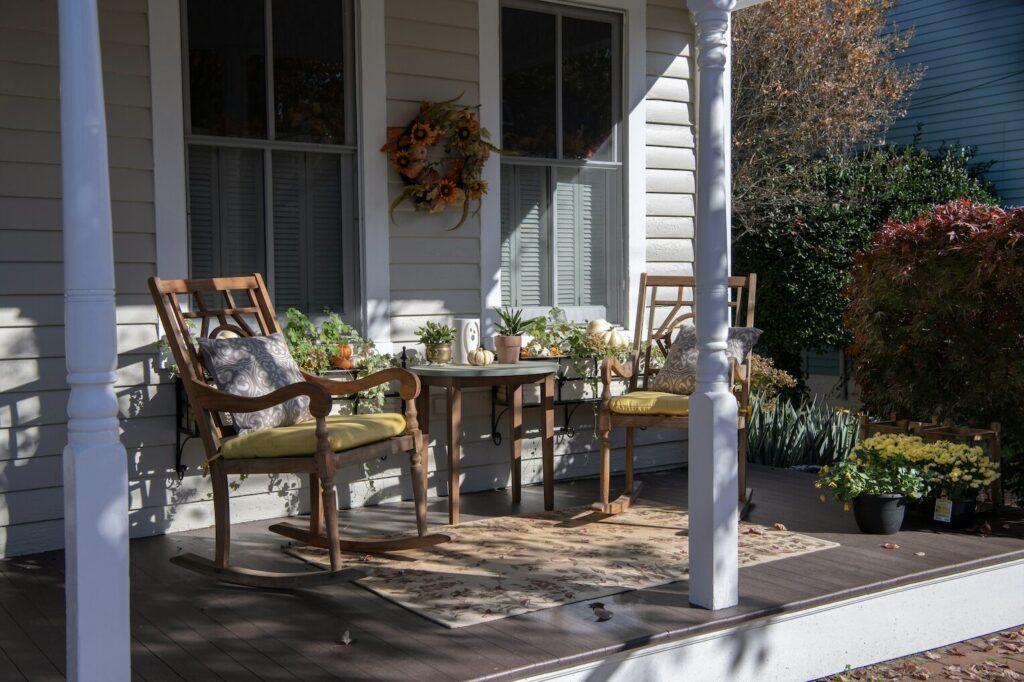
In today’s homes, front porches are often replaced by garages and back decks.
We come home, hit a remote, pull into the garage, and sometimes shut ourselves off from the people who live just a few feet away.
Some say the decline of the front porch began with the rise of air conditioning. Maybe that’s true. But perhaps in making ourselves more comfortable, we gave up something far deeper: a sense of belonging, of being truly present with one another.
Something important may have been lost in that transition.
The Bible calls us to love our neighbors as ourselves—not just in theory, but in practice. Philippians reminds us to not only look out for our own interests but also for the interests of others.
Acts 17 tells us that God has placed us at a specific time, in a specific place, for a reason. That means even our street, our neighborhood, is part of His providence.
That front porch on Driver Avenue carries an even deeper memory for me. When I was just nine years old, after hearing my dad preach a sermon, we got in the car and parked in front of Lizzie’s house. It was right there, in that quiet moment, sitting in front of that familiar porch, that I gave my life to Christ.
If I ever get the chance to build or buy a newer house, I hope it will have a front porch. Not just for style, but for purpose—a place open to friends, family, and especially neighbors.
Sometimes the simplest spaces hold the deepest meaning.