
Is the Bible Historically Reliable?
 By Chris Burnette
If you share the gospel regularly, you’ve likely heard some version of these objections:
- “The Bible is just a translation of a translation of a translation.”
- “We don’t even know where our modern Bible came from.”
- “The Bible is just a collection of fairytales written in modernity to manipulate others.”
There was a time in my life when I would respond to such objections with something like: “Well, at some point, you just have to take what the Bible says on faith.” I answered that way because I didn’t know any better… I hadn’t been taught, or done the research to understand, that there is really solid historicity behind the scriptures.
Faith is certainly a significant part of Christianity, but that doesn’t mean we are required to abandon history, evidence, or reason. We obviously can’t cover the entire history of the Bible in one blog post, but there are some important reasons to take a closer look at the historical reliability of Scripture.
Start With the Gospels
Consider the four Gospels: Matthew, Mark, Luke, and John.
These aren’t presented as four unrelated collections of religious ideas. They are four accounts of the life, ministry, death, and resurrection of Jesus – all written within the first century. Three of the gospels were authored by eyewitnesses, and the fourth was authored by someone with direct contact with eyewitnesses.
That matters because the closer a historical account is to the events it describes, the greater opportunity there is for other eyewitnesses who knew those events to confirm or challenge what was written. The New Testament contains a substantial amount of early source material concerning Jesus and the earliest Christian movement.
The only person from that era with a similar number of surviving biographies is the emperor, Tiberius Caesar, one of the most powerful and influential people of his time. However, we see more extensive biographical material for Jesus, written closer to the time of the actual events.

Think about that for a moment:
It makes sense that we would see substantial biographical source material for a man who was emperor of Rome for twenty-two years. But Jesus was an itinerant rabbi from a no-name town – He was not a king, military leader, or political ruler. And His public ministry lasted only three years. Truth be told, on face value, there should have been little-to-nothing written about Jesus at all.
So what made the difference?
Why would multiple, detailed written accounts of Jesus’ life survive for two thousand years, while the stories and movements surrounding other messianic figures of His time largely faded into history? The answer Christians have proclaimed from the beginning is that Jesus wasn’t simply another would-be messiah. Something happened that changed everything: He rose from the dead!
This doesn’t prove every claim made about Jesus by itself. But it should challenge the idea that the story of Jesus was simply invented centuries later by people who had no connection to the events.
What About Manuscripts?
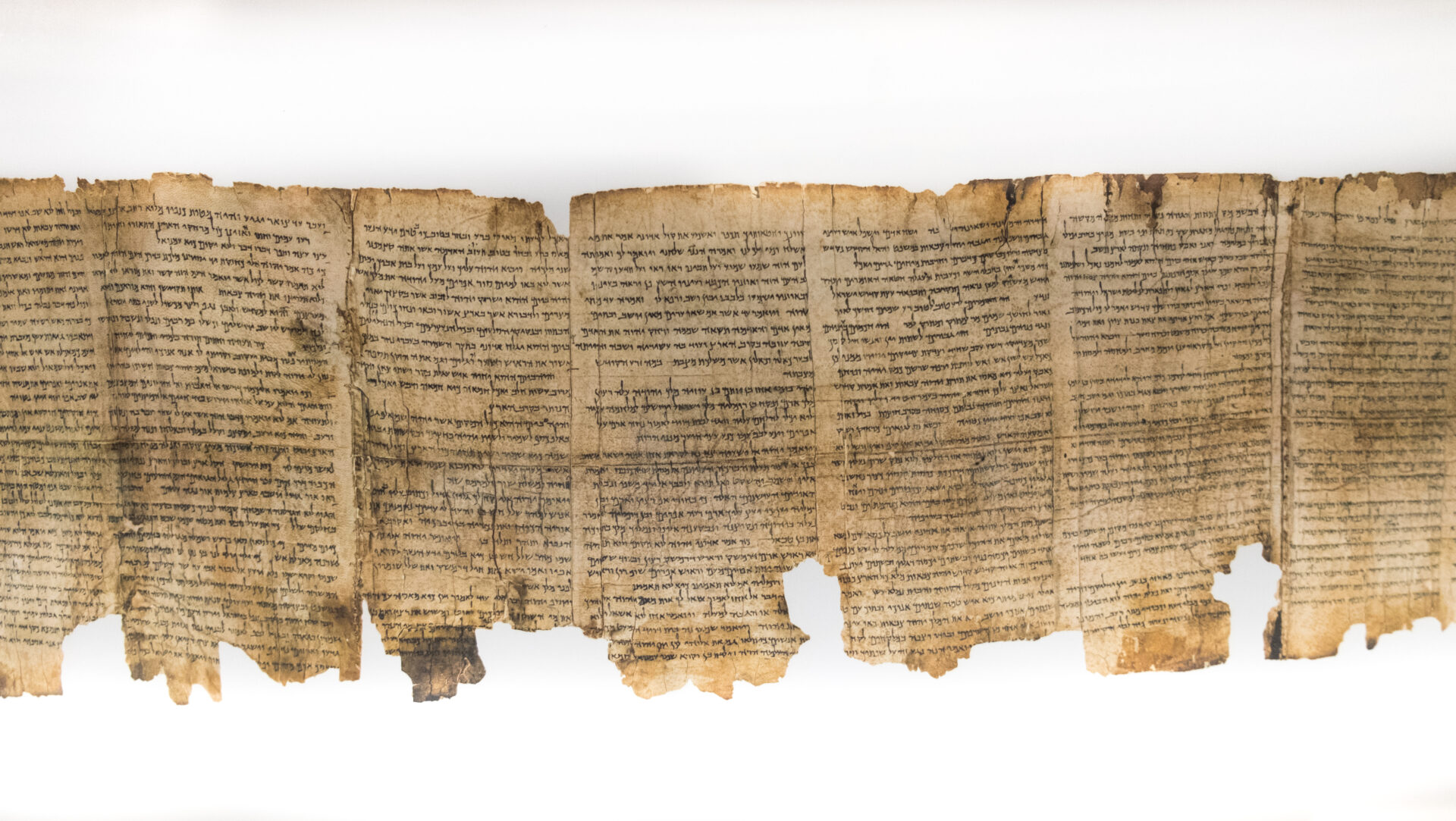
Another common objection is that we don’t have the original handwritten copies of the scriptures. That’s true. But that’s not unusual for ancient literature. What matters is how much ancient (within 100 years of their original penning) manuscript evidence we have and how closely those manuscripts can be compared with one another and with the earliest available witnesses.
Presently, there are approximately 5,600 ancient Greek manuscripts of the New Testament. When these manuscripts are compared, they demonstrate an extraordinarily high degree of agreement – 99.5% textual accuracy. And the more ancient manuscripts we discover and compare, the higher that accuracy figure climbs. That is to say – as we discover additional manuscripts, we are getting closer to what the original authors wrote, not farther away.

Our modern Bible is not the result of generations of people independently rewriting the text until we ended up with something completely different. Modern translations are based on the surviving manuscripts, compared carefully with one another, in the original biblical languages of Greek, Hebrew, and Aramaic. Our modern Bible is a single-step translation from those original manuscripts.
What About Archaeology?
Every year, archaeological and historical discoveries provide additional information about the people, places, cultures, rulers, and events mentioned in Scripture.
Archaeology doesn’t “prove the Bible” in the sense that every archaeological discovery demonstrates every theological claim. But archaeological evidence can, and does, help confirm that the biblical authors were writing within real historical settings.
Names, locations, political figures, customs, cities, and other details recorded in Scripture can be investigated against what we know from the ancient world. And these investigations consistently bear out the accuracy of Scripture. As our knowledge of the ancient world grows, the Bible continues to provide a remarkably rich historical record to examine.
What About the Early Church?
There’s another important question: How did the early Christians recognize particular writings as scripture?
It’s sometimes suggested that hundreds of years after Jesus’ earthly ministry, church leaders simply gathered together, voted on their favorite books, and created the Bible (along with things like the divinity of Jesus).
The history is more complex than that. The writings that came to be recognized as Scripture were connected to the earliest Christian community and to apostles, eyewitnesses, or people closely connected to eyewitnesses.
In other words, the early church wasn’t starting with hundreds of completely unrelated books and randomly choosing its favorites. The books recognized as authoritative had longstanding connections to the earliest Christian communities and their understanding of the apostolic witness.
If you were to ask the earliest Christians why they chose Matthew, Mark, Luke, and John, they would likely reply, “What do you mean ‘choose’?” If they were fans of sarcasm, like me, they might also ask, “Why did you choose your parents?”
With All of That Said
The Bible contains 66 books, written over roughly 1600 years, by almost 40 authors, across three continents, and in three different languages. Yet it has 63,779 logical cross-references, tells one unified story, and has zero contradictions. From Genesis to Revelation, Scripture develops a consistent story of creation, humanity’s fall into sin, God’s work of redemption, and the restoration of all things.
But here’s where we need to be careful. Historical evidence isn’t a substitute for faith. No archaeological discovery can force someone to believe that Jesus is the Son of God. No manuscript count can compel someone to trust Christ. That is the work of the Holy Spirit. Christianity makes theological claims that go beyond what historical investigation alone can establish.
But it’s also important to understand that faith isn’t believing without evidence. Christian faith is not a demand to ignore history and believe something simply because someone told you to. The Bible makes claims about real people, real places, and real events in history. Those claims can be investigated. They can be compared with ancient manuscripts, historical sources, archaeology, and the testimony of the earliest Christian communities.
And when we do that, we find that the Bible is far more historically grounded than the common objections against it would suggest. So, if someone tells you, “You can’t trust the Bible because it’s just an ancient book that has been copied and changed over thousands of years,” don’t feel like you have to choose between faith and history.
You don’t have to disbelieve history to believe the Bible. Faith isn’t believing without evidence. The history of the Bible gives us good reason to trust what it says.